Cautious approach extends to big tech-linked deals as banks scrutinize contract terms and cash flows.
Nebius secured a $3.5 billion loan commitment last month; financing costs and maturities emerge as investment variables.
Some banks are tightening their lending criteria for artificial intelligence (AI) data centers, adopting a more cautious stance even on deals backed by big tech companies. Companies that have secured contracts with major clients could still face delays in facility expansion if they fail to borrow funds in a timely manner and under manageable terms.
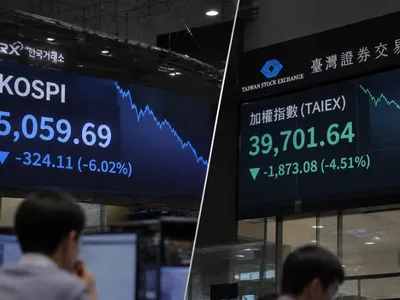
Citing financial market sources, Reuters reported on the 9th (local time) that certain financial institutions are reluctant to provide additional funding for AI-related transactions backed by companies such as Google and Anthropic. The financial institutions involved were not disclosed, and both Google and Anthropic declined to comment. Market observers attribute this shift to the recent sharp drop in AI-related stocks and growing concerns that data center regulations could be tightened following the U.S. midterm elections.
Banks Look Beyond Secured Contracts to Execution Risks
According to Reuters, financial institutions are examining clauses that allow major clients to reduce or terminate contracts, while also checking whether cash flows can be sustained during economic downturns. Facility operation deadlines and mandatory service obligations are also subject to review.
This indicates that merely winning a contract is no longer sufficient. For businesses that generate revenue only after facilities become operational, any construction delays can push back the inflow of sales. Depending on whether a company has the financial resources to cover construction costs and interest in the interim, the actual financial burden can vary significantly even among firms that have secured orders of the same scale.
Nebius Secures $3.5 Billion Loan Commitment; Maturities and Interest Rates Remain Pivotal
The specific terms under which necessary funds are raised are highlighted in the case of AI cloud company Nebius.
According to U.S. Securities and Exchange Commission (SEC) filings, Nebius and related borrowing entities entered into a $3.5 billion senior secured bridge loan agreement with Citigroup on October 17. A bridge loan is short-term financing utilized prior to securing long-term capital. Announcing the deal on the 22nd of the same month, the company stated that the funds would be used for data center development, graphics processing unit (GPU) purchases, and general corporate operations.
The loan carries a maturity of less than a year, with an interest margin that increases over time. The commitment period is 364 days, ending on October 16, 2027. Interest is calculated by adding a margin to the Secured Overnight Financing Rate (SOFR), a short-term U.S. dollar benchmark. The margin starts at 2.75 percentage points per annum and increases by 0.25 percentage points every 90 days after the contract date, up to a maximum of 3.50 percentage points, alongside other adjustment conditions.
The company stated that it is funding facility construction costs by combining customer prepayments and operating cash flow with external capital, adding that this agreement provides leeway in choosing the timing and structure of subsequent financing. It also proposed asset-backed financing based on long-term contracts exceeding $40 billion with investment-grade clients as an additional funding avenue.
However, the total value of long-term contracts and the loan commitment limit do not equate to cash currently in hand. Long-term contracts serve as the basis for future revenues, while loan commitments represent borrowing capacities available under specified conditions.
When deploying short-term borrowings with maturities of less than a year into facilities and equipment intended for multi-year use, it becomes crucial whether the debt will be repaid through business earnings or refinanced with long-term capital. This is why financial distress should not be inferred from short maturities alone, and why market participants must monitor whether subsequent financing plans are actually executed.
The 'Time Lag Between Investment and Revenue' Unescapable Even for Big Tech
The time lag between capital investment and revenue realization remains a burden for big tech as well. Speaking in an interview released on August 5, Amanda Lynam, Head of Macro Credit Research at Goldman Sachs, noted based on explanations from hyperscalers (large-scale data center operators) that a gap of approximately three months to two years can occur between investment and monetization.
Lynam suggested a divergence exists between a company's borrowing capacity and the volume the bond market can realistically absorb. Even for highly creditworthy companies, investors face limits on how much they can allocate to a single issuer, and market conditions constrain the volume that can be digested. She also noted that investors evaluate long-term and short-term bonds differently, implying that debt maturity structuring directly influences investor demand.
When financing conditions face such constraints, borrowing costs and the pace of facility expansion can vary across companies even if AI demand remains robust. If interest expenses mount before revenues materialize, expected returns on projects diminish, and delayed fundraising could force postponements in construction starts or equipment deployment.
Going forward, market participants must examine actual loan commitments, borrowing terms, and the timing of customer cash inflows alongside total investment figures. Whether subsequent financing proceeds as scheduled and facility operation timelines are maintained will demonstrate the execution capability of corporate investment plans.