



December 1.5% Rate Hike Speculation Amid 6.8% Plunge in Household Consumption; Spending Shrinks Despite Wage Growth
Internal Disagreements Over Tightening Pace; Stock Market Declines Complicate Financial Condition Assessments
The Bank of Japan (BOJ) finds itself in a more complex situation than anticipated ahead of potential further interest rate hikes. While inflationary pressures remain, household consumption has contracted significantly, and the stock market has recently become volatile. While the market discusses the possibility of raising the benchmark interest rate from the current 1.25% to 1.50% in December, the burden on consumption and investment is growing.
BOJ Pushes for Rate Hikes as Consumption Plummets Despite Wage Gains
Minutes from the BOJ’s October 29-30 Monetary Policy Meeting, released on the 10th, revealed a divergence in views regarding further rate hikes.
One policy board member argued that financial conditions remain accommodative, stating that the pace of raising the policy rate toward the neutral rate should be accelerated. Another member agreed on the need to reach the neutral rate promptly but suggested a "cautious approach" while monitoring financial conditions for several months following any hike.
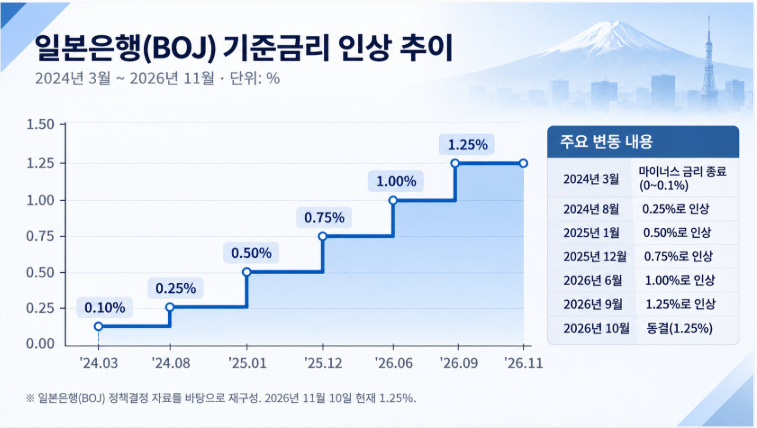
The BOJ raised the benchmark rate by 0.25 percentage points each in June and September to 1.25%, before holding it steady in October. The BOJ estimates the nominal neutral rate to be in a broad range of 1.1% to 2.5%. Experts surveyed by Reuters anticipate a hike to 1.50% in December, with a terminal rate between 1.75% and 2.00%.
 Amid these discussions, Japan's consumption indicators have deteriorated more than expected. According to the Ministry of Internal Affairs and Communications, real household consumption for households with two or more people fell 6.8% in September compared to the same month last year, far exceeding the market forecast of a 3.1% decline. This marks the largest drop since September 2020 and a 2.8% decrease from the previous month.
Unlike the sharp decline in consumption, wages continued to rise. Nominal wages increased by 4.6% and real wages, adjusted for inflation, rose by 2.2% in the same month, yet household spending retreated. The virtuous cycle of wage growth leading to increased consumption, which the BOJ has been anticipating, has yet to materialize clearly.
While unusually heavy rainfall in September contributed to reduced outdoor activity and spending, the fact that real consumption has declined for 10 consecutive months suggests that the trend cannot be explained by weather factors alone. As the burden of essential costs like food and energy persists, it may take more time for wage increases to translate into broader consumption.
Japanese Households Hold 486 Trillion Yen in Stocks; Market Downturn Becomes a Variable
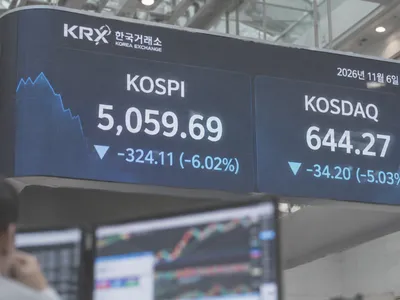
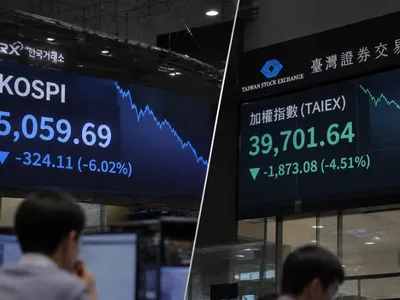
In addition to sluggish consumption, the recent global sell-off has spread to the Japanese stock market, increasing the variables the BOJ must consider when assessing financial conditions.
According to Reuters, Japanese households held 486 trillion yen in stocks as of the end of June, a 47% increase from the same period last year. This figure, confirmed by the BOJ’s Flow of Funds statistics, largely reflects the increase in valuation due to rising stock prices.
With stock holdings at such high levels, a prolonged market downturn could erode household financial assets and dampen consumer sentiment. Corporations may also adjust their investment plans conservatively if market instability persists. Even without further rate hikes, the decline in asset prices could impact consumption and investment.
The BOJ has previously maintained that financial conditions remain accommodative, citing low real interest rates, increased bank lending, and smooth corporate financing. However, the October meeting saw suggestions that real interest rates, corporate finance, and asset prices should be examined in tandem. Notably, it was mentioned that stock prices are heavily influenced not only by monetary policy but also by external factors such as global demand for artificial intelligence (AI).
If the stock market weakness persists, it could coincide with the delayed effects of previous rate hikes, further straining the economy. Reuters reported on the 10th that financial market instability is testing the BOJ’s assessment of accommodative financial conditions.
Japan’s interest rate hikes also impact overseas financial markets. As the interest rate gap between the U.S. and Japan narrows and the yen strengthens, the repayment burden for funds borrowed in low-interest yen to invest in overseas assets could increase. The unwinding of yen carry trades could lead to increased volatility in global stock markets.
The BOJ is scheduled to hold its next Monetary Policy Meeting on December 17-18. Attention is now focused on whether Governor Kazuo Ueda will clarify his stance on further rate hikes during his speech on November 30. Even if a December hike occurs, if consumption remains weak and market volatility persists, the interval for future rate hikes next year may be longer than initially expected.