



Hotter-Than-Expected CPI Pushes 10-Year Yield Near 5%
Nvidia Falls 6% as Semiconductor Stocks Diverge
Key Market Trends
1. CPI Exceeds Forecasts, Waller Remarks Heighten Rate Pressures
U.S. stocks fell as higher-than-expected inflation, hawkish comments from Federal Reserve officials, and weakness in Nvidia converged. While five sectors including energy, financials, and consumer goods rose, six sectors—including technology, materials, and utilities—declined.
The October Consumer Price Index (CPI) rose 0.4% from the previous month, topping the market forecast of 0.3%. Core CPI also rose 0.3%, exceeding the expected 0.2%. Immediately following the release, the U.S. 10-year Treasury yield briefly climbed to 5.02%.
Remarks by Federal Reserve Governor Christopher Waller added to the market burden. Waller supported a December rate hike and raised the possibility of a larger increase if inflation readings remain high. Lorie Logan similarly expressed the view that additional hikes are necessary to curb inflation.
However, it is premature to conclude that inflation is continuously worsening. International oil prices have fallen sharply this month, and gasoline prices have dropped below $4.00 per gallon for the first time since July. The increase in October energy prices also slowed significantly compared to September. Future inflation trends will require monitoring to see how much the recent decline in oil prices is reflected.
2. Nvidia Drops 6% Amid Continuing CEO Risks
Nvidia fell 6% as fallout continued over investigations surrounding CEO Jensen Huang. Combined with recent controversies regarding AI investments and data centers, ongoing CEO risks have resulted in relatively weaker momentum compared to other semiconductor peers.
Securities firms are still placing more weight on short-term uncertainty rather than fundamental damage. While some brokerages lowered their target prices to reflect the CEO risks, they actually presented higher earnings forecasts.
Goldman Sachs recently assessed that semiconductor stocks have entered oversold territory. Even if strong catalysts for a broad rally are lacking right through year-end, the firm judged that valuation appeal has increased, naming Nvidia, Broadcom, and AMD as preferred picks.
Broadcom and AMD showed strength, decoupling from Nvidia. It is worth noting that unlike previous trends where the entire semiconductor sector moved in tandem, a movement is emerging to distinguish between individual companies' earnings and risks.
3. Rebounding After Sharp Declines, But Liquidity and Positioning Still to Be Verified
Much of the recent market volatility stems not only from fundamentals, but also from position unwinding by hedge funds and systematic trading. The operating scale of leveraged and inverse ETFs has reportedly decreased by about $55 billion over the past 20 days.
This suggests that the scale of mechanical buying and selling triggered during sharp index swings could be smaller than before. Foreign selling has slowed since last Thursday, and the domestic stock market also saw a return to net buying in the previous session.
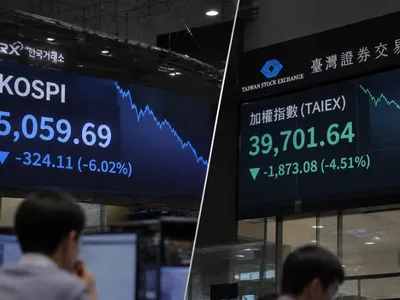
U.S. and Asian stock markets are also attempting to rebound following steep drops. If the forced liquidation that pressured the market has run its course to some extent, the market may transition to a phase of comparing actual earnings outlooks against stock price pullbacks.
Analyst Perspective
Following the U.S. midterm elections, the data center issues that shook the stock market appear to be passing their peak. The actual terms of office for new governors begin after January of next year, and current remarks are closer to demands for reducing resident damages and strengthening compensation rather than outright data center bans.
The market has also begun to reflect these nuances gradually. U.S. and Asian stock markets recently rebounded, and foreign investors turned to net buyers domestically. What matters is not a single day of buying, but whether the hedge fund and foreign selling pressure that shook the market last week is genuinely being cleared out.
Today, CPI and interest rates are new variables. With the 10-year yield climbing back near the 5% mark, it could pose a burden for growth stocks. Conversely, international oil prices pulling back to around the $86 level could act in the opposite direction for future inflation.
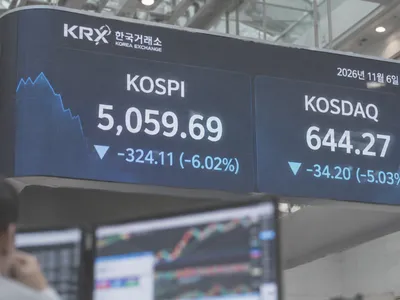
The MSCI Korea Index fell 2.03% and overnight futures dropped 1.74%. Given that the domestic stock market rebounded sharply in the previous session, the possibility of some retracement must be kept open. While it is difficult to view volatility as having ended outright, it is a time to continuously distinguish between established market leaders and institutional accumulation stocks whose prices were pushed down far more than their earnings outlooks during the recent correction.
Today's Checkpoints
Interest Rates: Whether the U.S. 10-year Treasury yield settles near the 5% line and how tech stocks react
Semiconductors: Monitoring whether Nvidia's weakness spreads to Samsung Electronics and SK hynix
Foreign Investors: Whether the shift to net buying from the previous day continues
Supply and Demand: The intensity of additional unwinding by hedge funds and systematic selling
Leading Stocks: Whether semiconductors and previous market leaders sustain their recovery following yesterday's sharp rebound
Key Indicators
Dollar Index: 102.2 (+0.6%)
International Oil Prices (WTI): $86.04 (-0.93%)
Volatility Index (VIX): 19.5 (-1.9%)
U.S. 10-Year Treasury Yield: 4.98%
MSCI Korea Index: -2.03%
Overnight Futures: -1.74%
Source: Market Analyst Stock Story (t.me/shmstory)
YouTube: Analyst TV (www.youtube.com/@blueoak1004)
This article has been reorganized from a Telegram post by Market Analyst's Stock Story with the author's consent. All content may contain errors and does not constitute a recommendation to buy or sell, and thus cannot be used as a basis for trading. The contents of this post cannot be used as legal grounds under any circumstances.