Samsung SDI to supply from Europe, LG Energy Solution from the U.S. for next-gen batteries.
Expansion of 46mm cylindrical production base; post-contract challenges include stabilizing mass production and securing utilization rates.
Samsung SDI and LG Energy Solution have both been selected as suppliers for BMW's next-generation batteries. As automakers increasingly prioritize sourcing batteries near their vehicle production sites, overseas manufacturing capacity has emerged as a critical factor alongside technological prowess in securing major contracts.
BMW announced on the 9th (local time) that it had selected the two companies as additional cell suppliers for its 6th-generation high-voltage 'Gen6' batteries. Samsung SDI will supply cells produced in Europe, while LG Energy Solution will provide cells manufactured in the United States. Deliveries are scheduled to begin in the late 2020s from existing facilities in each region. Specific contract values, volumes, and timelines were not disclosed.
This agreement aligns with BMW's strategy to localize its supply chain, aiming to reduce transportation costs and stabilize supply by minimizing the distance between cell production, battery assembly, and vehicle manufacturing. BMW currently operates Gen6 battery assembly facilities near its vehicle plants in Germany, Hungary, China, the U.S., and Mexico.
In Europe, the companies will compete alongside Chinese manufacturers. BMW identified CATL, EVE Energy, and Samsung SDI as its cell suppliers for the European market, setting the stage for a competition between South Korean and Chinese firms based on quality, pricing, and delivery schedules.
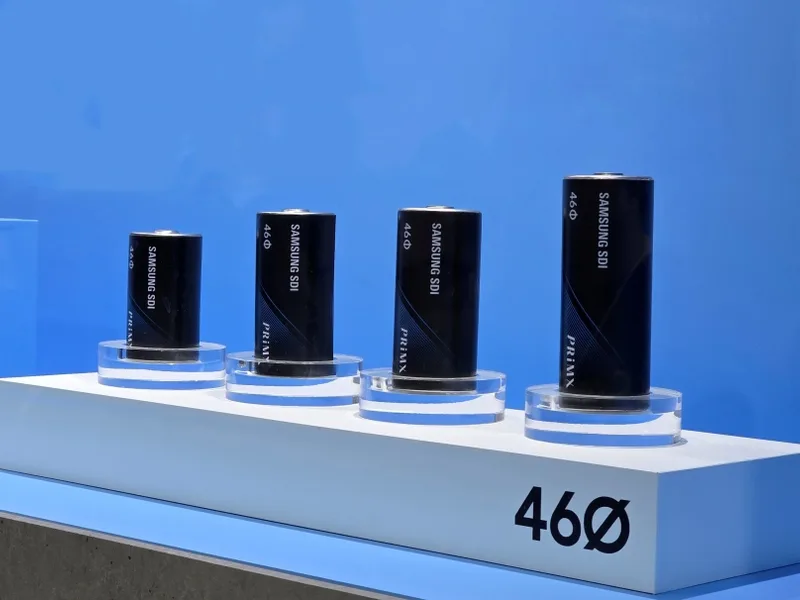
The battery specifications are also shifting. BMW is adopting 46mm-diameter cylindrical cells for its Gen6 batteries, moving away from the prismatic cells used in previous generations. Even for existing partners, this transition requires significant upgrades to equipment and manufacturing processes.
LG Energy Solution is preparing for cylindrical cell production in both the U.S. and Europe. During its earnings call on the 3rd, the company announced it is preparing to launch its first North American cylindrical battery plant in Arizona. This facility is a key production hub, notably supporting a 67 GWh, five-year supply contract with Rivian signed in November 2024. In Europe, the company plans to establish 46-series production capacity at its Polish plant, which has historically focused on pouch-type batteries, by 2029. BMW has not specified which U.S. facility will handle its order.
Post-construction, factory utilization rates will be the primary driver of profitability. LG Energy Solution attributed its improved third-quarter performance to higher utilization at its Polish plant, increased volume of cylindrical batteries, and productivity gains at its new energy storage system (ESS) facilities.
Samsung SDI is closely monitoring regional demand disparities. During its earnings call on the 29th of last month, the company projected that while European EV demand is expected to rise in the fourth quarter, the slowdown in the U.S. market will likely persist for some time. Consequently, the company plans to pursue new orders with a diversified portfolio, including high-nickel, lithium iron phosphate (LFP), and mid-nickel batteries, to meet the varying performance and pricing requirements of automakers.
Both companies now face the challenge of stabilizing mass production to meet delivery schedules while maintaining quality and managing manufacturing costs. Converting these overseas contract wins into sustainable, long-term profit remains the next critical hurdle for the South Korean battery industry.