


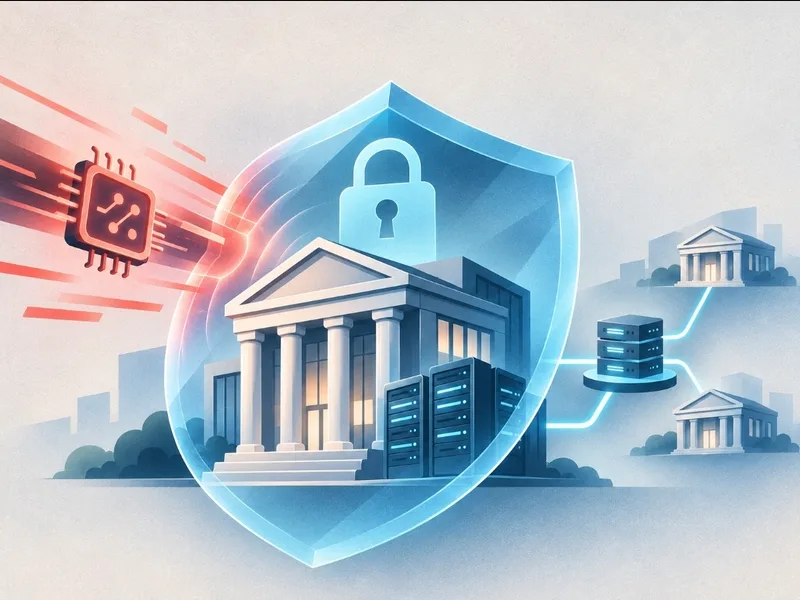
Low-cost tools expand attack capabilities, while defense faces constraints in cost, speed, and procedure.
Concerns grow over widening security gaps between organizations; external supply chain audits and joint contingency plans are essential.
The European Central Bank (ECB) has warned that the rise of artificial intelligence (AI) is lowering the threshold for cyberattacks, significantly increasing the defensive burden on banks. The analysis suggests that while attacks are becoming easier and faster, banks may struggle to keep pace with the adoption of necessary defensive technologies.
In a special analysis within its Financial Stability Report released on the 16th (local time), the ECB assessed that the proliferation of low-cost AI has made it easier for even low-skilled attackers to conduct cyber operations. The report suggests that defenders will remain at a structural disadvantage for the foreseeable future.
The UK's National Cyber Security Centre (NCSC) also noted in its annual report released on the 3rd that AI assists in identifying targets, discovering vulnerabilities, and writing malicious code. As the ability to find security flaws improves, the likelihood of attackers exploiting them before operators can apply patches is expected to rise. However, the NCSC analyzed that rather than replacing humans, AI is primarily enhancing the efficiency of skilled attackers, thereby increasing the speed and scale of existing attack methods.
Banks face significant hurdles in deploying similar technologies for defense. ECB researchers pointed to the high costs of high-performance defensive models and the risk that system latency could disrupt operations. Other constraints include concerns over transmitting sensitive security data to external servers, as well as lengthy decision-making processes bound by internal guidelines and regulations. Eurozone banks are also seen as being at a disadvantage in securing the latest AI models.
The effectiveness of these defenses is expected to vary depending on an organization's resources. The NCSC noted that organizations with sufficient resources and management systems can improve threat detection and response using AI. Conversely, organizations with weak security frameworks, legacy technology, or limited resources may struggle to keep up with the accelerating pace of attacks, leading to a widening gap in defensive capabilities across the sector.
The use of external services presents both advantages and risks. The ECB noted that while the technology and expertise of specialized firms can enhance security levels, an over-reliance on a small number of providers could mean that a failure at one point could cascade across multiple banks.
Data presented in the study, covering the first quarter of 2025 through the third quarter of 2026, indicates that approximately one-fifth of major cyber incidents at Eurozone banks originated from external service providers. While this figure includes operational failures and not just malicious attacks, it highlights the systemic risk. To date, there have been no cyber incidents that have destabilized the entire Eurozone banking system. Researchers recommend that banks, technology firms, and regulators establish joint contingency plans, regularly audit response systems, and identify common points of vulnerability shared across financial institutions.
---
Sources: ECB, "Decoding the cyber-AI nexus"; NCSC, "The impact of AI on cyber threat".
NCSC material attribution: Contains public sector information licensed under the Open Government Licence v3.0.