

Additional 165.6 billion won order secured; total value of three contracts equals 33% of last year's revenue.
Third-quarter revenue surges 196% as the company pivots toward semiconductor and energy equipment.
Global metal platform company Seojin System has secured a 165.6 billion won contract from U.S.-based Bloom Energy to produce fuel cell modules and components. With the total value of supply contracts with Bloom Energy reaching 350.6 billion won since July, the growth potential of the company's fuel cell business is drawing significant market attention.
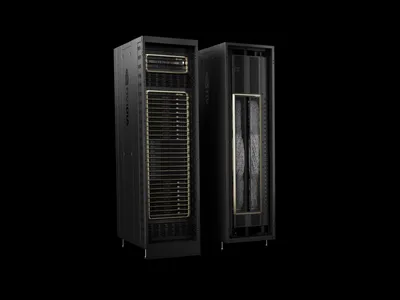
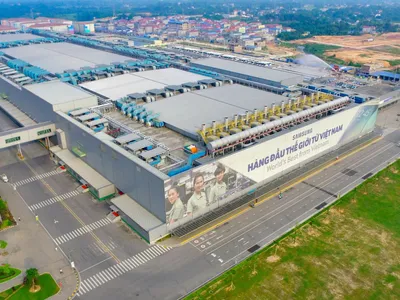
On the 25th, Seojin System announced it had signed a supply agreement for Solid Oxide Fuel Cell (SOFC) modules and components with Bloom Energy. The contract value represents 15.53% of the company's consolidated revenue from the previous year. Production will be handled through its Vietnamese subsidiary, with the contract running until December 19, 2027.
Bloom Energy's Rapid Growth Drives Fuel Cell Supply Expansion
Following an initial 78.5 billion won supply contract on July 15 and a 106.4 billion won agreement on October 12, Seojin System announced this latest 165.6 billion won order. The combined value of these three contracts totals 350.6 billion won, accounting for 32.9% of last year's consolidated revenue.
The rising demand for electricity driven by the expansion of AI data centers is providing a positive tailwind. SOFCs are gaining traction as a distributed power source capable of generating electricity near demand sites, effectively addressing delays in power grid infrastructure expansion.
Bloom Energy reported third-quarter revenue of $1.2358 billion, a 138.1% increase year-on-year. The company has raised its annual earnings guidance three times this year, projecting annual revenue between $4.4 billion and $4.6 billion, more than double the previous year's figure.
Q3 Operating Profit Turnaround and Strategic Business Restructuring
Seojin System's third-quarter consolidated revenue reached 562.1 billion won, a 195.6% increase compared to the same period last year. Operating profit turned to a surplus of 38.7 billion won, with an operating margin of 6.9%.
Cumulative revenue for the first three quarters reached 1.22 trillion won, up 77.6% year-on-year. Semiconductor equipment revenue hit 563.3 billion won, reaching 1.9 times the total annual revenue of the previous year in just nine months. Revenue from the Energy Storage System (ESS) sector, including SOFCs, reached 440.1 billion won, with these two segments accounting for 82.3% of total revenue.
While ESS plants in Texas and Indiana began operations in the third quarter, the company also initiated a business restructuring in September by discontinuing non-core operations, including home appliances, heavy industry, automotive wheels, and machine tools. However, due to a 103.5 billion won loss from discontinued operations and foreign exchange translation losses, the company reported a net loss of 201.2 billion won for the third quarter.
With the expansion of fuel cell orders complementing the growth in semiconductor equipment and ESS businesses, the company is strengthening its mid-to-long-term growth foundation. The key moving forward will be the conversion of secured orders into revenue and the improvement of profitability through ongoing business restructuring.