

Sanofi registers Phase 3 trial for Dupixent co-formulation; ALT-B4 application area expands
Second-largest shareholder buys 4.6 billion won in shares; stock price remains 58% below average brokerage target
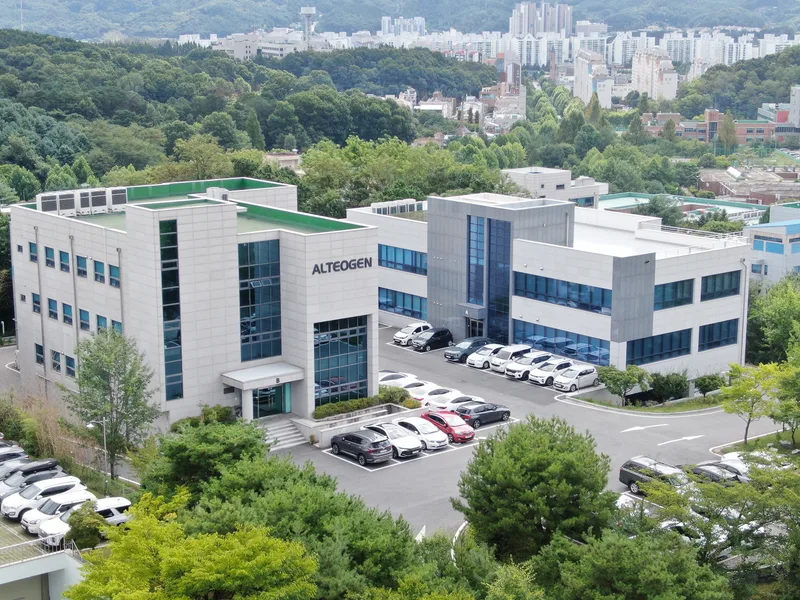
Alteogen’s subcutaneous (SC) formulation technology is extending its reach beyond the immunotherapy Keytruda into immune disease treatments and antibody-drug conjugates (ADCs). As French pharmaceutical giant Sanofi registers a Phase 3 clinical trial for a Dupixent co-formulation, Japan’s Daiichi Sankyo is also developing an SC version of Enhertu. Despite these concrete development plans from global pharmaceutical companies, market expectations for Alteogen have actually cooled.
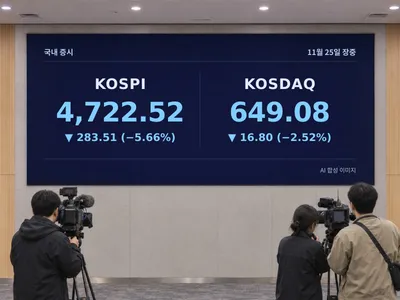
On the 25th, Alteogen closed at 169,600 won, up 6.20% from the previous trading day. While the stock rebounded following a surge in U.S. biotech shares, it remains less than half of the 410,000 won and 400,000 won target prices set by Hana Securities and Kyobo Securities, respectively. Concerns regarding the success of ADC subcutaneous conversion and potential long-term royalty revenue declines due to U.S. drug price cuts continue to weigh on investor sentiment.
Beyond 'Injection Method Conversion' to 'Formulation Improvement': Dupixent Phase 3
According to the U.S. clinical trial database ClinicalTrials.gov, Sanofi registered the 'EXTENSA' Phase 3 trial earlier this month for a subcutaneous co-formulation combining Alteogen’s hyaluronidase, ALT-B4, with Dupixent.
Following a Phase 1 trial involving 40 healthy adults, this Phase 3 study will compare the pharmacokinetic characteristics, safety, and immunogenicity of the existing formulation versus the co-formulation in 150 patients aged 12 and older with moderate-to-severe atopic dermatitis.
Unlike the original Keytruda, which was developed as an intravenous injection, Dupixent was launched as a subcutaneous injection from the start. If this development succeeds, the utility of ALT-B4 will expand beyond converting intravenous injections to subcutaneous ones, reaching into the improvement of existing subcutaneous drug formulations.
Sanofi’s third-quarter revenue for Dupixent reached 5.687 billion euros, a 34.8% increase year-on-year at constant exchange rates. Cumulative revenue from January to September exceeded 15 billion euros. For Alteogen, this represents an opportunity to secure another revenue stream from a global blockbuster drug following Keytruda.
Enhertu Dose Escalation Phase Recruitment Complete; Next Steps Under Review
Regarding the change in the number of patients for the Enhertu SC trial, which triggered a stock price drop the previous day, partner company Daiichi Sankyo clarified its position. The number of registered participants for the Phase 1 trial was adjusted from 76 to 17; the former was an estimated recruitment target, while the latter represents the actual number registered.
In a response disclosed by Alteogen, Daiichi Sankyo stated, “We have completed patient enrollment for the dose escalation phase (Part 1) of this clinical trial,” adding that they are “reviewing the next steps and will share updates accordingly.”
In the Phase 1 trial for the existing intravenous (IV) formulation of Enhertu, patients were also recruited across dose escalation and dose expansion phases. According to European Medicines Agency (EMA) review documents, out of 292 total registered patients, 27 participated in the dose escalation phase.
Kim Sun-ah, an analyst at Hana Securities, noted on the 25th, “Considering the nature of formulation changes rather than typical Phase 1 design for new drug development, 17 patients are sufficient to conduct a dose escalation study,” adding that “the number of registered participants will likely increase once the trial enters the dose expansion phase.” The expected completion date for the trial remains unchanged despite the information update.
Stock Price Gap of 58% Despite Successive Target Price Cuts
Previously, Hyung In-woo, CEO of Smart & Growth and the second-largest shareholder of Alteogen, disclosed that he and related parties purchased 27,000 shares of Alteogen in the open market for approximately 4.6 billion won between the 9th and 10th. At the time, concerns over long-term royalty revenue declines due to U.S. drug price cuts were mounting, and CEO Hyung deemed the stock price decline excessive.
Brokerages have also adjusted their corporate valuations and long-term earnings forecasts. Hana Securities lowered its target price from 580,000 won in August to 410,000 won this month, while IBK Securities cut its target from 400,000 won to 320,000 won. Kyobo Securities also lowered its target from 620,000 won to 400,000 won, citing adjustments to royalty revenue estimates beyond 2029 and valuation criteria.
The average target price set by five major brokerages this month is 402,000 won, ranging from 320,000 to 450,000 won. The closing price on the 25th was 57.8% below this average. While brokerages have lowered their expectations, the market’s assessment remains even more cautious.
Jung Hee-ryung, an analyst at Kyobo Securities, assessed, “While various market noise may follow given the history of multiple deals, the impact is already excessively reflected in the stock price.” She noted that considering the robust prescription performance of Keytruda SC (Keytruda Curax), the stock’s valuation appeal has increased.
Hana Securities estimates Alteogen’s operating profit at 305 billion won this year and 406.3 billion won next year. As the expansion of Keytruda SC sales supports earnings growth, the development of Dupixent and Enhertu is also proceeding in stages.